Safeguarding is everyone's responsibility
Report a safeguarding concern
If you have a safeguarding concern about a child or vulnerable adult, tell us — no matter how small you feel the concern is.
What is safeguarding
Safeguarding is the action that is taken to promote the welfare of children/vulnerable adults and protect them from harm. Safeguarding means: protecting children/vulnerable adults from abuse and maltreatment. preventing harm to children's/ vulnerable adults health or development.
Our primary aim is to ensure that our staff and learners (children and vulnerable adults) feel safe and are protected from abuse, harm, or neglect. All our staff regardless of their role undertake safeguarding and prevent training. In addition, we have a highly dedicated and experience Safeguarding Team to support our staff and learners. We encourage our staff and learners to raise any concerns they may have no matter how small they feel the concern is.
We are committed to ensuring safeguarding practice reflects statutory responsibilities, government guidance and complies with best practice. We follow a safer recruitment model for any staff that meet our learners, and we obtain an enhanced DBS, references and other relevant background checks.
Reporting a safeguarding concern
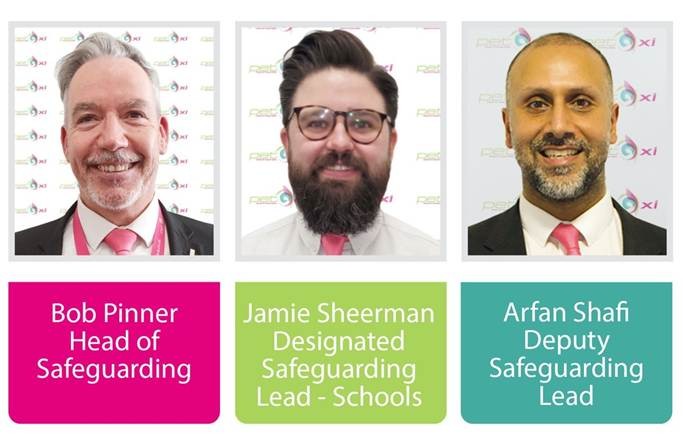
If you need to report a safeguarding concern, please contact one of the members of the safeguarding team using the contact number or email above.
Mental health support
Kooth
PET-Xi is committed to promoting the mental health and emotional wellbeing of all learners. As part of our safeguarding approach, we signpost learners to trusted external services that provide specialist support alongside the help available within our organisation.
Kooth is a free, online mental wellbeing service for children and young people. It offers a safe and confidential space where users can access support at a time that suits them, without needing a referral.
Kooth provides:
- Live chat and messaging with qualified mental health practitioners
- Moderated peer discussion boards
- Self-help articles and personal stories
- Wellbeing tools such as journaling and goal-setting
Kooth is available online and can be accessed from a computer or mobile device.
Safeguarding information
Prevent
The Prevent statutory duty, which came into force on 1 July 2015, has prompted a significant step forward in the delivery of Prevent work across all public sector organisations. Coventry Council engages with local communities, groups and organisations across the City to help safeguard local people from the risks of radicalisation to violent extremism. The range of our work includes supporting local community projects, providing training and awareness around radicalisation and safeguarding those who may be affected.
Prevent covers all forms of terrorism and extremism.
- The main aim of Prevent is to stop people from becoming terrorists or supporting terrorism
- At the heart of Prevent is safeguarding children and adults and providing early intervention to protect and divert people away from being drawn into terrorist activity.
- Prevent addresses all forms of extremism but continues to ensure resources and effort are allocated on the basis of the greatest threat to our national security.
British Values
We see British Values as underpinning what it is to be a citizen in a modern and diverse Britain. They allow us to create environments free from discrimination, intolerance and hate. They help us to challenge prejudice and stereotyping, whilst strengthening relationships within the community.
British Values are defined as the following:
Democracy — A culture built upon freedom and equality, where everyone is aware of their rights and responsibilities.
The rule of law — The need for rules to make a happy, safe and secure environment to live and work.
Individual liberty — Protection of your rights and the rights of others around you.
Mutual respect & tolerance of different faiths and beliefs — Understanding that we all don't share the same beliefs and values. Respecting those values, ideas and beliefs of others whilst not imposing our own onto them.
Consent
A short video on consent (opens on YouTube):
Sexual Harassment and Violence
Support and Guidance
Cyberflashing
Cyber flashing is when a person is sent an unsolicited sexual image on their device via AirDrop, a file-sharing tool available on iPhones, through Bluetooth, or over wifi.
It often happens in public places – such as trains or on buses – due to the technology's short-range.
The Cambridge Dictionary describes it as 'the act of someone using the internet to send an image of their naked body, especially the genitals (= sexual organs), to someone that they do not know and who has not asked them to do this'.
It is difficult to tell who might be sending an image in a crowded space, as when something is sent to another person's phone via AirDrop, the receiver sees a preview of the image and the name of the iPhone sender.
If someone's AirDrop settings are set to 'Everyone', it means someone outside of their contacts list can anonymously request to send them a file – and the sender's identity will also remain anonymous.
Domestic Abuse
What is domestic abuse?
We define domestic abuse as an incident or pattern of incidents of controlling, coercive, threatening, degrading and violent behavior, including sexual violence, in the majority of cases by a partner or ex-partner, but also by a family member or carer. It is very common. In the vast majority of cases it is experienced by women and is perpetrated by men.
Domestic abuse can include, but is not limited to, the following:
- Coercive control (a pattern of intimidation, degradation, isolation and control with the use or threat of physical or sexual violence)
- Psychological and/or emotional abuse.
- Physical or sexual abuse.
- Financial or economic abuse.
- Harassment and stalking.
- Online or digital abuse.
Suicide Prevention
Talking about suicide
There are things we can all do in situations where we are worried about someone who we think may be at risk of suicide. Talking can really make a difference.
Here are some suggestions that can help:
Watch out for signs of distress — It's important to watch out for signs of distress and changes in behaviour. If you know someone well, you can often tell if they are behaving in a way that may indicate serious distress. For example, they may be withdrawn, appear unusually dishevelled or change how they make financial or personal plans.
It's ok to ask someone if they're suicidal — There is evidence that shows if you ask someone if they're suicidal, it can help protect them. It's ok to ask someone, "are you having suicidal thoughts?". By asking directly about suicide, you give them permission to tell you how they feel and let them know they are not a burden.
Always listen and take them seriously — If someone does tell you they are having suicidal thoughts, always take them seriously. Try to listen in an unhurried way without distractions. You don't have to be able to solve their problems. The act of listening and being understanding will help. If you can, offer support and encourage them to talk about their feelings.
Arrange to speak to them again — If you can, arrange to speak to them again at a specific time. This will show your ongoing support and will make them feel valued. It also gives them something to look forward to.
Simple actions can help you be there for them — Simple actions can help you be there for someone who is experiencing suicidal thoughts or recovering from an attempt to take their own life. People who have felt suicidal will often say what a huge relief it was to be able to talk about what they were experiencing.
Encourage seeking professional support — It's also important to encourage them to seek professional support and know when to step back to look after themselves.
If you are feeling like ending your life or feel unable to keep yourself safe, please call 999 or go to A&E and ask for the contact of the nearest crisis resolution team. These are teams of mental health care professionals who work with people in severe distress.
Key contacts
Coventry Local Authority
- Prevent
- Manjeet Pangli manjeet.pangli@coventry.gov.uk
- Safeguarding
- 024 7697 5477 CoventryCSCP@coventry.gov.uk
Warwickshire Local Authority
- Prevent
- Geoff Thomas geoffthomas@warwickshire.gov.uk
- Safeguarding
- 01926 410410
Sheffield Local Authority
- Prevent
- Prevent@southyorks.pnn.police.uk
- Safeguarding
- 0114 273 4855
Policies and documents
- Safeguarding Against Radicalisation — Prevent Referrals poster (PDF)
- Safeguarding Against Radicalisation — Channel Panel poster (PDF)
- Sexual violence and harassment guidance (PDF)
- [DOCUMENT TO SUPPLY: current Safeguarding Policy PDF — the previous link (SA01 Safeguarding Policy V5) returned 404 and needs re-supplying.]